
Singapore is aggressively pushing its shift towards electric mobility, making 2026 a crucial year for prospective EV buyers. The government has extended key incentive programs but has also adjusted rebates to reflect the maturing Electric Vehicle (EV) market. Understanding these financial benefits is essential for making an informed decision about switching to electric.
With a national target of $100\%$ cleaner energy vehicles by 2040, Singapore continues to offer substantial savings to early adopters. However, these incentives are being gradually tapered as EVs become more mainstream and affordable.
1. The EV Early Adoption Incentive (EEAI): Final Countdown
The EEAI has been extended until December 31, 2026, but with a significant reduction in benefit. Buyers registering electric cars in 2026 will receive a rebate of $45\%$ off the Additional Registration Fee (ARF), capped at $$7,500$. This represents a sharp reduction from the previous cap of $$15,000$, signaling the government's confidence in sustained EV adoption.
- Immediate Savings: This rebate automatically reduces your upfront cost by being applied directly during vehicle registration.
- Premium Vehicle Benefit: For those considering a Denza electric car or other premium EVs, this rebate substantially narrows the price gap with comparable traditional combustion engine cars.
- Expiration: The EEAI will cease entirely starting January 1, 2027. This makes 2026 the absolute final year to benefit from this specific incentive program.
2. Vehicular Emissions Scheme (VES): Electric-Only Benefits
The VES has been extended from January 1, 2026, through December 31, 2027, with a major policy change: only fully electric vehicles will qualify for rebates under the revised scheme. Hybrid vehicles, which previously enjoyed rebates, will no longer receive any VES benefits.
- Maximum Rebates: EVs can receive VES rebates of up to $$22,500$, adding significantly to the overall savings package.
- Increased Surcharges: Conversely, more pollutive vehicles face higher surcharges, reaching up to $$35,000$ in 2026 and $$45,000$ by 2027.
This dual approach of rewarding clean vehicles while penalizing polluting ones provides a powerful financial incentive, continuously narrowing the cost difference between an EV and a traditional car.
3. Combined Upfront Savings: Up to $30,000

By combining the EEAI (capped at $$7,500$ in 2026) and the VES rebates (up to $$22,500$), buyers registering electric cars in 2026 can receive total cost reductions of up to $$30,000$ off the ARF.
- Post-2026 Savings: Those purchasing in 2027 can still save up to $$20,000$ (VES rebate only).
- Zero ARF Floor: The $$0$ ARF floor for electric cars and taxis is maintained until December 31, 2027, ensuring buyers won’t face unexpected ARF charges after calculating all rebates.
Added Information: The COE Factor in 2026
While the ARF rebates are fixed, potential buyers must factor in the Certificate of Entitlement (COE) premium. The government is expected to continue releasing more COEs in Category A (small cars, typically including mainstream EVs) to meet rising demand, which could stabilize or slightly ease premiums compared to recent peaks. However, demand for EVs is projected to increase sharply in 2026 before the EEAI ends, potentially creating a temporary spike in COE prices for Cat A/B. Buyers should monitor COE trends closely to maximize their total savings package.
4. Road Tax and Total Cost of Ownership (TCO)
Beyond upfront purchase incentives, EV owners benefit from long-term savings:
- Road Tax Reduction: Since January 1, 2022, road tax for fully electric cars in the 90-230kW bracket has been reduced to ensure electric and ICE cars of similar makes pay comparable road tax. These savings accumulate over a typical 10-year ownership period.
- Lower Fuel Costs: Electricity costs for charging are significantly lower than petrol expenses. Many EV owners report fuel cost savings of $50$ to $70\%$ compared to equivalent combustion engine vehicles.
- Lower Maintenance: Electric drivetrains have fewer moving parts, leading to significantly lower maintenance costs (no oil changes, less transmission or exhaust servicing).
5. Charging Infrastructure Support for Homeowners
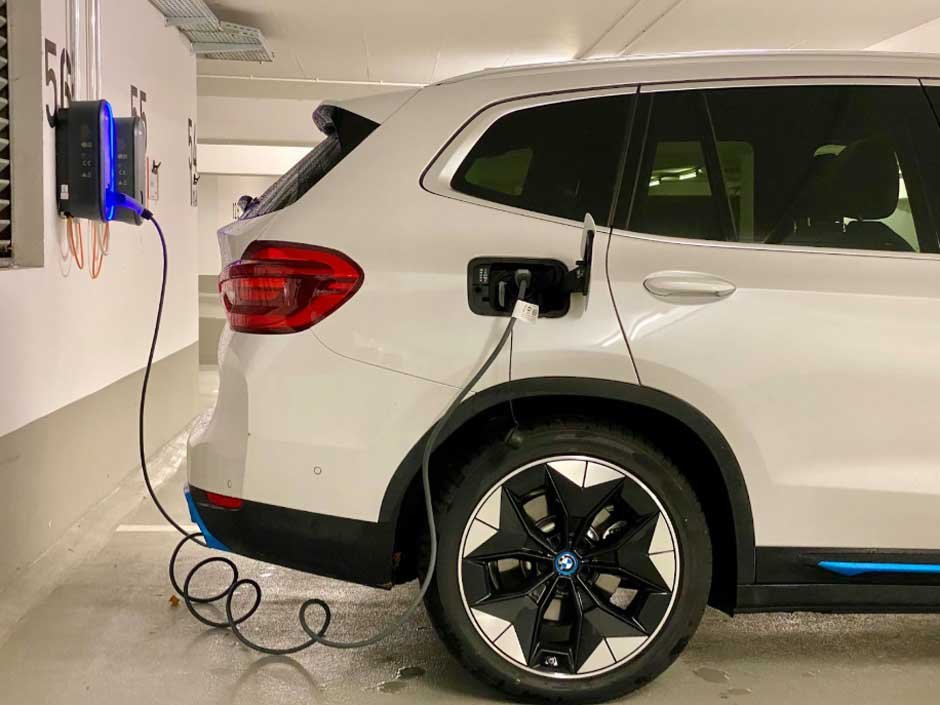
Singapore is committed to deploying $60,000$ EV charging points by 2030, with over $60\%$ of HDB carparks already equipped as of March 2025.
- EV Common Charger Grant (ECCG): This grant has been extended until December 31, 2026.
- Support for Condos: The ECCG co-funds up to $50\%$ of installation costs for charging points at non-landed private residences like condominiums. The program has been expanded to support an additional $1,500$ chargers, capped at $$3,000$ per unit.
This support lowers the financial barrier for building management committees to install shared charging infrastructure, ensuring convenient charging access regardless of housing type.
6. Commercial Vehicle Incentives
Commercial operators benefit from additional programs:
- Heavy Vehicle Zero Emissions Scheme (HVZES): Launches January 1, 2026, offering $$40,000$ for zero-emission heavy goods vehicles or buses, disbursed over three years.
- Electric Heavy Vehicle Charger Grant (EHVCG): Co-funds up to $50\%$ of charger installation costs, capped at $$30,000$ per charger for the first $500$ commercial chargers.
Final Recommendation: Maximizing Savings in 2026

To secure the maximum savings of up to $$30,000$, you must purchase and register your EV before December 31, 2026, to receive the final EEAI benefit. Focus your calculations on the long-term Total Cost of Ownership (TCO), which factors in the upfront incentives, lower road tax, and significant savings on fuel and maintenance.
The tapering of incentives signals market maturity, but the financial benefits in 2026 remain substantial. This window of maximum support, combining the EEAI, VES rebates, and infrastructure grants, won’t last forever, making 2026 the optimal time to adopt electric mobility.
Frequently Asked Questions (FAQ) ⚡️
Q: What is the maximum possible savings in 2026?
The maximum combined upfront savings in 2026 is $$30,000$ off the Additional Registration Fee (ARF). This includes the EEAI rebate capped at $$7,500$ (for 2026) and the maximum VES rebate of up to $$22,500$.
Q: Will hybrid cars still qualify for rebates in 2026?
No. Under the revised Vehicular Emissions Scheme (VES) from January 1, 2026, only fully electric vehicles will qualify for VES rebates. Hybrid vehicles will no longer receive any VES benefits.
Q: What is the added benefit of buying in 2026 compared to 2027?
The main added benefit in 2026 is the EV Early Adoption Incentive (EEAI), which provides a rebate of up to $$7,500$. This incentive expires completely on December 31, 2026. In 2027, buyers can only benefit from the VES rebate (up to $$20,000$) and the $$0$ ARF floor.